
 BOPP Printing & Laminating Film BOPP Heat Sealable FilmBOPP Pearlized FilmBOPP Tobacco Cigarette Wrapping FilmBOPP Flower Wrapping FilmBOPP Capacitor FilmBOPP ZN/AL Metallized Capacitor Film SilverBOPP Office Use BagsBOPP Anti-Fog FilmBOPP Matte Film (15,18,20 Microns) Matt Polypropylene FilmBOPP Color Printed Film BOPP Metallized film aluminium silver
 Packing Film Production Lines BOPP Film Production Lines BOPET Film Production Lines Tape Production Lines Thermal Lamination Film Production Lines Bruckner Production Lines (Germany) Mitsubishi Production Lines (Japan) Copy Paper Production Lines Silver Metallized Film Production Lines POF Film Production Lines
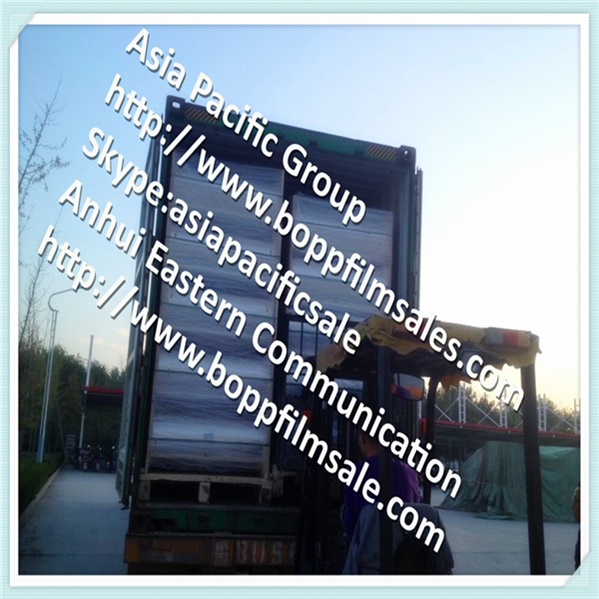
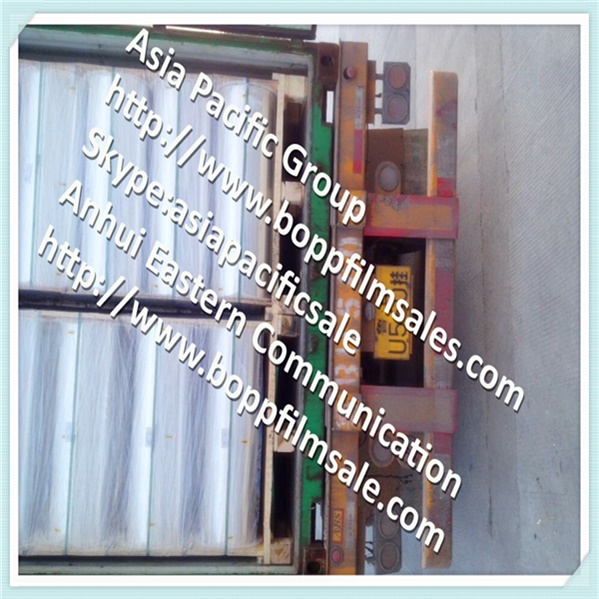
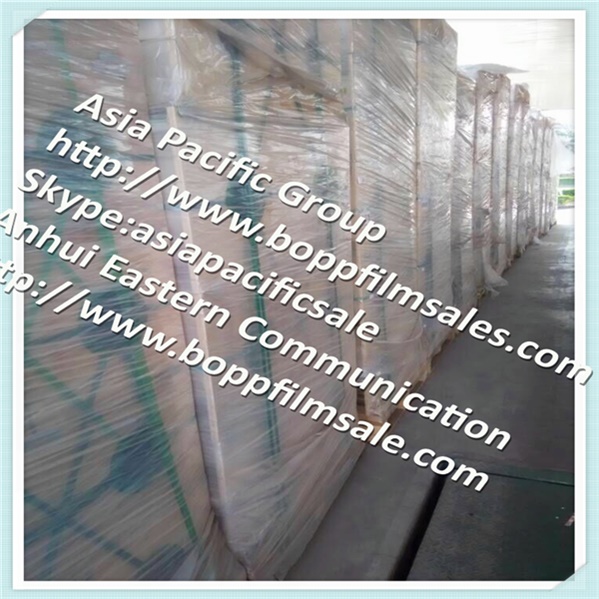
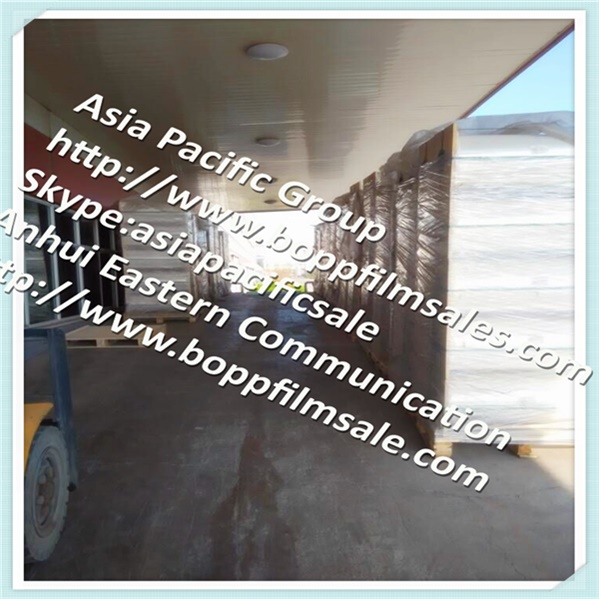

B grade stock BOPET film 3.8-4.55MIC uncoating , clear transparent
 Check Details
4.5 micrometer BOPET substandard products for use in printing composites & lamination
4.5µm BOPET substandard (off-grade) products in the printing and lamination
B grade stock BOPET TTR film 3.8-4.55MIC uncoating , clear transparent
In the world of Biaxially-Oriented Polyethylene Terephthalate (BOPET) production, 4.5-micrometer (4.5MIC) film is an ultra-thin specialty product primarily designed for high-end applications like Thermal Transfer Ribbons (TTR)
"Substandard" (Off-grade/B-grade) refers to batches that fail the rigorous "Electrical" or "TTR" grade standards due to minor thickness fluctuations, surface crystals (pinholes), or tension inconsistencies. However, these materials are highly sought after in the Printing Composite (Lamination) industry due to their extreme cost-efficiency.
1. Why Use Substandard 4.5μm Film for Composites? In standard flexible packaging, 12micPET is the norm.
Shifting to 4.5MICsubstandard products offers three major strategic advantages:
Extreme High Yield: 4.5MIC film provides approximately 2.6 times more surface area per kilogram compared to 12mic film (158M2 vs 60 m^
2.Cost Reduction: Substandard products are often sold at a 20%–40% discount compared to prime TTR-grade film. Combined with the high yield, this drastically slashes raw material costs.
Enhanced Barrier Properties: Even as a "substandard" product, PET offers superior oxygen and aroma barriers compared to BOPP or PE of the same thickness.
2. Typical Application ScenariosSubstandard 4.5mic film is rarely used alone; it is almost always laminated to a thicker substrate which provides the necessary mechanical support.A. Paper-to-Film Lamination (Luxury Packaging)
Application: Gift boxes, high-end shopping bags, and book covers.Process: The film is laminated to cardboard. The paper provides the "backbone," while the 4.5mic PET adds a high-gloss, water-resistant finish.
Benefit: Minor thickness variations in the film are invisible once bonded to the opaque paper.
B. Vacuum Metallized Composites (VMPET)Application: Snack food pouches (inner layer) or decorative "gold/silver" cardstock.Process:
The film is metallized with aluminum. Small surface defects (crystals) are often covered by the metal layer.
Benefit: Provides an excellent moisture barrier for a fraction of the cost of standard VMPET.
C. Triple-Layer Flexible Packaging Structure: BOPP / 4.5 mic PET Substandard} / CPP.
Usage: Used as a middle "stiffening" and barrier layer. It adds "crinkle" and heat resistance to the pouch without adding significant bulk.
3. Technical Challenges & WorkaroundsUsing substandard ultra-thin film requires specific adjustments on the factory floor to avoid high scrap rates:
4. When dealing with 4.5µm BOPET substandard (off-grade) products in the printing and lamination sector, your communication needs to pivot from "precision/perfection" to "yield/value/utility."
Here are the essential keywords categorized for marketing, technical negotiation, and procurement.
1. Value Proposition Keywords (The "Sales" Pitch)Since these are substandard products, the focus is on the economic benefit for the lamination plant.
Yield Advantage: The most important term. It refers to the massive amount of square meters obtained per kilogram (158 m^2).
Cost-Benefit Ratio: Highlighting that the lower price point justifies the minor technical adjustments needed.Substrate Replacement: Using 4.5µm to replace thicker $10\mu\text{m}$ or $12\mu\text{m}$ films in non-critical applications.Plastic Reduction / Lightweighting: Positioning the film as a "Green" solution by using less polymer for the same coverage area.
Overrun / Stock Lot: Professional terms for "substandard" that imply the product is still high quality but available at a clearance price.
2. Technical Deficiency Keywords (The "Honest" Jargon)To manage customer expectations and avoid claims, use these terms to describe why it is substandard.
Gauge Variation / Thickness Fluctuation: The film is not perfectly 4.5mic across the entire web.
Surface Defects / Gel / Fish-eyes: Small lumps or impurities in the film that might affect high-definition printing but are fine for lamination.
Tension Inconsistency: The roll might be "loose" on one side and "tight" on the other (baggy edges).
Profile Deviation: Refers to the "high and low" spots on the jumbo roll.
Transmittance Issues: If the film is slightly hazy or not perfectly clear.
3. Lamination & Processing Keywords
These terms describe how the film will be used in the factory.
Dry Lamination: The most common process for this film (using solvent-based or solvent-less adhesives)
.Paper-to-Film Bonding: Specifically for greeting cards, book covers, and luxury boxes.
Tie-Layer: Using the PET as a middle layer between two other materials (e.g., BOPP/PET/PE).
Corona Treatment / Dyne Level: Ensuring the "off-grade" film still has enough surface energy for the glue to stick.
Low-Tension Unwinding: A necessary machine setting to handle ultra-thin substandard film without snapping it.
4. Application-Specific KeywordsWhere exactly is this "substandard" film going Gold/Silver
Cardstock: Laminated PET used as a base for metallic inks in the tobacco or liquor packaging industry.
Thermal Lamination: If the PET has been pre-coated with EVA glue (though rare for 4.5µm, it’s a growing niche).
Flexible Packaging Inner Layer: Used for its barrier properties in snack food or condiment pouches.
Protective Over-lamination: Simply providing a "scratch-proof" layer for printed paper.
5. Logistics & Specification Keywords Crucial for the "Proforma Invoice" or "Packing List."
Jumbo Rolls: Usually 24,000m to 40,000m in length.
Net Weight vs. Gross Weight: Standard trading terms.
Core Diameter: Usually 3" or 6".
COF (Coefficient of Friction): Very important; if the COF is too high, the "substandard" film will stick to itself and be unusable.
OD (Outer Diameter): Ensuring the roll fits on the customer's lamination machine.
6. Sizes for B grade stock BOPET TTR film 3.8-4.55MIC uncoating , clear transparent
Thcikness: 3.5,3.8,4.0, 4.1,4.2,4.3,4.4,4.5,4.55,4.6,4.8, 5.0 ,5.3, 6.0um
width of BOPET thermal transfer basic film: 360,500,620,685,650,700,750,850,900,905,910,980,1010,1020,1030,1090,
1200,1290,1350,1400,1500,1560mm
length of BOPET thermal transfer basic film:15000,16300,17000,18500,20000,24000,36000.40000,44000,55000m
feature of BOPET thermal transfer basic film: clear/transparent
Usage: for printing,and laminating, and silver metallized
Thermal Transfer Ribbons have stability features in shrinkage and thickness stability
,in good heat resistance,easy processing in thermal transfer
Application of BOPET thermal transfer basic film:suitable for use in bar code printers,fax machines and
transfer ribbon. polyester film for transfer print
Some size for reference:
1.) 4.5Mic(T) x 1010mm(W) x 18,000M(L) x 6" (inner paper tube core).
2.) 4.5Mic(T) x 910mm (W) x 18,000 meters (L), Core : 152mm ID x 700mm L
3.) 4.5Mic(T) x 620mm (W) x 18,000 meters (L), Core : 152mm ID x 700mm L
Output: 2200 – 2500 ton/ month
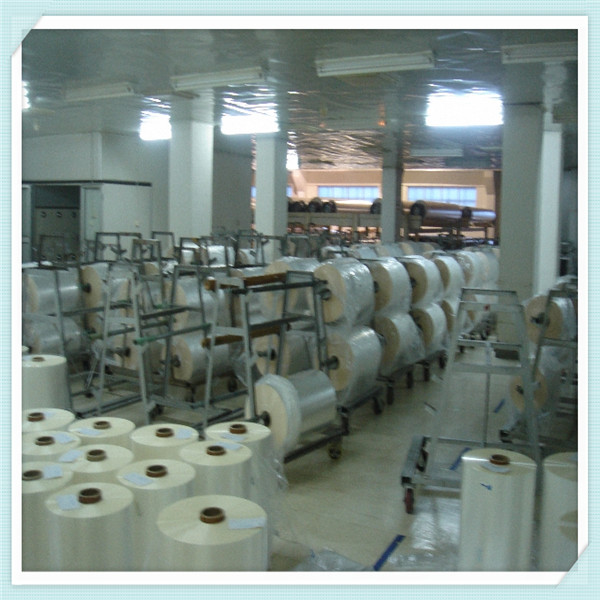

BOPET polyester film 4.2-4.5microns
BOPET polyester film 4.2-4.5microns
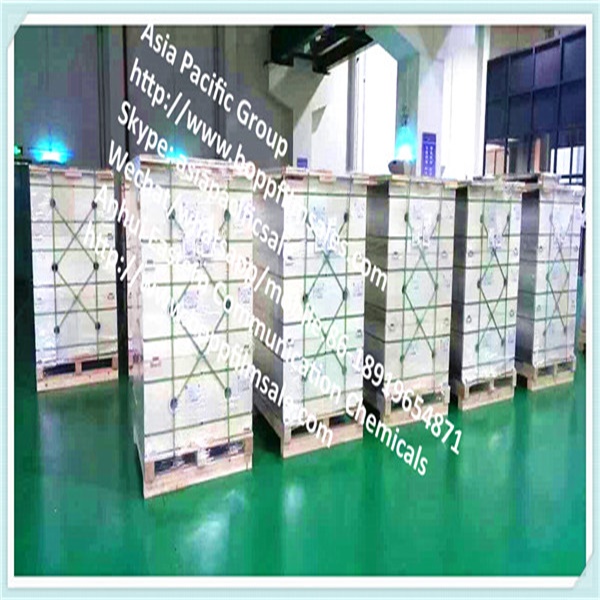
4.5Microns BOPET thermal transfer film
4.5Microns BOPET thermal transfer film
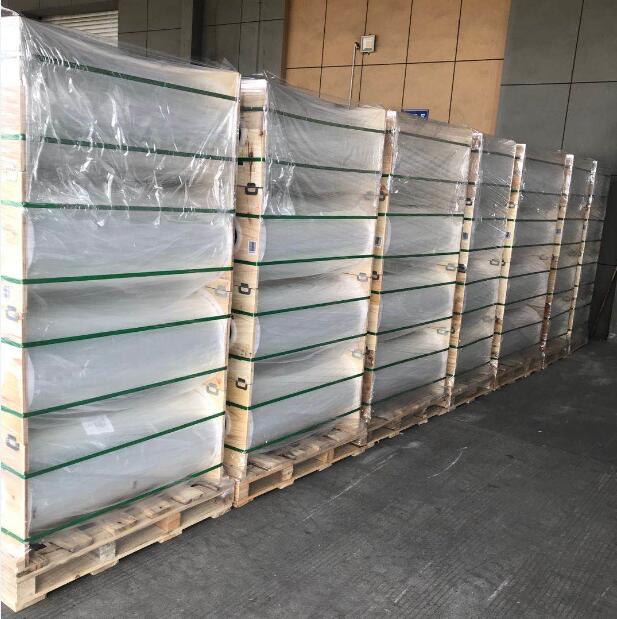
BOPET Thermal Transfer Ribbon (TTR) Film 4.5Microns
BOPET Thermal Transfer Ribbon (TTR) Film 4.5Microns
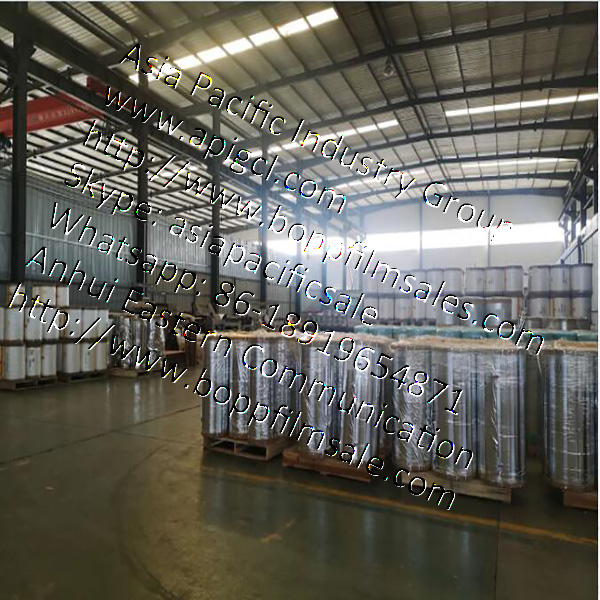
4.5 Microns BOPET Film silver metallized
4.5 Microns BOPET Film silver metallized
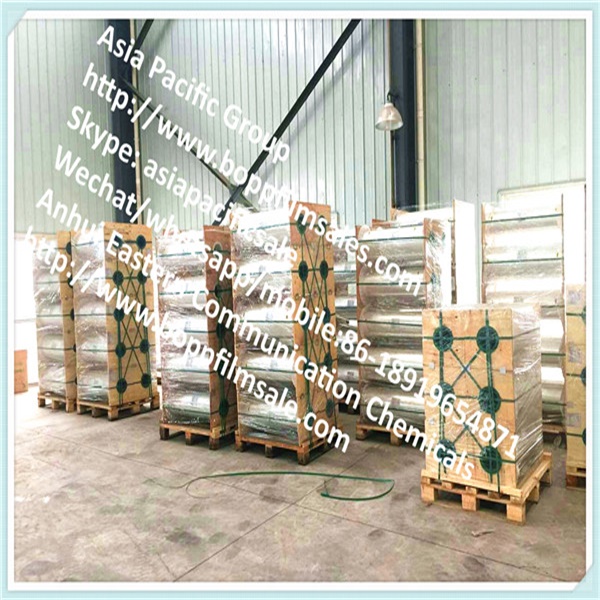
4.5Mic BOPET film clear transparent , unprinting & uncoating ( for priting and laminating) ,
4.5Mic BOPET film clear transparent , unprinting & uncoating ( for priting and laminating) ,
B grade stock BOPET film 3.8-4.55MIC uncoating , clear transparent
B grade stock BOPET film 3.8-4.55MIC uncoating , clear transparent
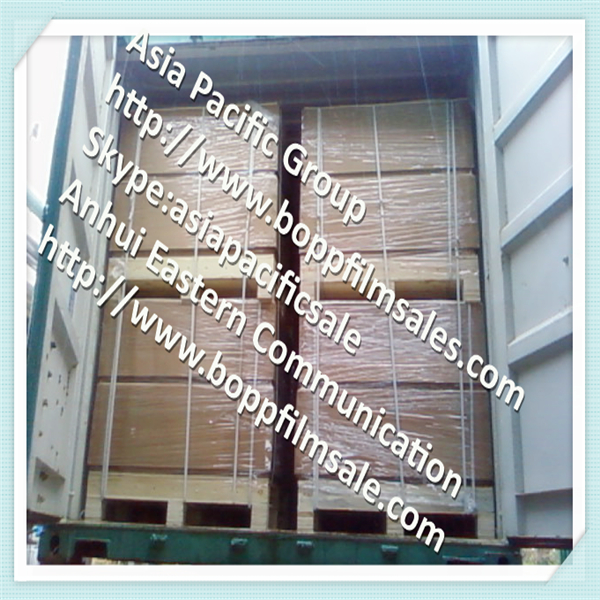
4.0-4.5Microns BOPET TTR (Thermal Transfer Ribbons) basic film series for carbon
4.0-4.5Microns BOPET TTR (Thermal Transfer Ribbons) basic film series for carbon
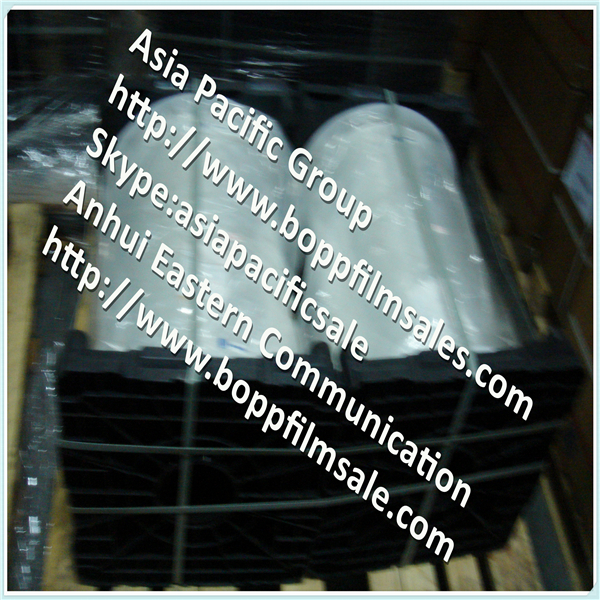
BOPET electronic thermal transfer basic film for WAX printer ribbons
BOPET electronic thermal transfer basic film for WAX printer ribbons


 asiapacificsale
 840715367
 18919654871
 86-551-64687285
NO.3399 LUZHOU AVE.,BAOHE DIST., 230051, HEFEI, ANHUI,CHINA
Tel: 86-551-64687285
Mobile phone: 86-86-18919654871
sales@boppfilmsales.com
admin@apigcl.com


 Chinese
 English